

“There ran a rumour…” - A phrase that appears everywhere from medieval chronicles onwards.
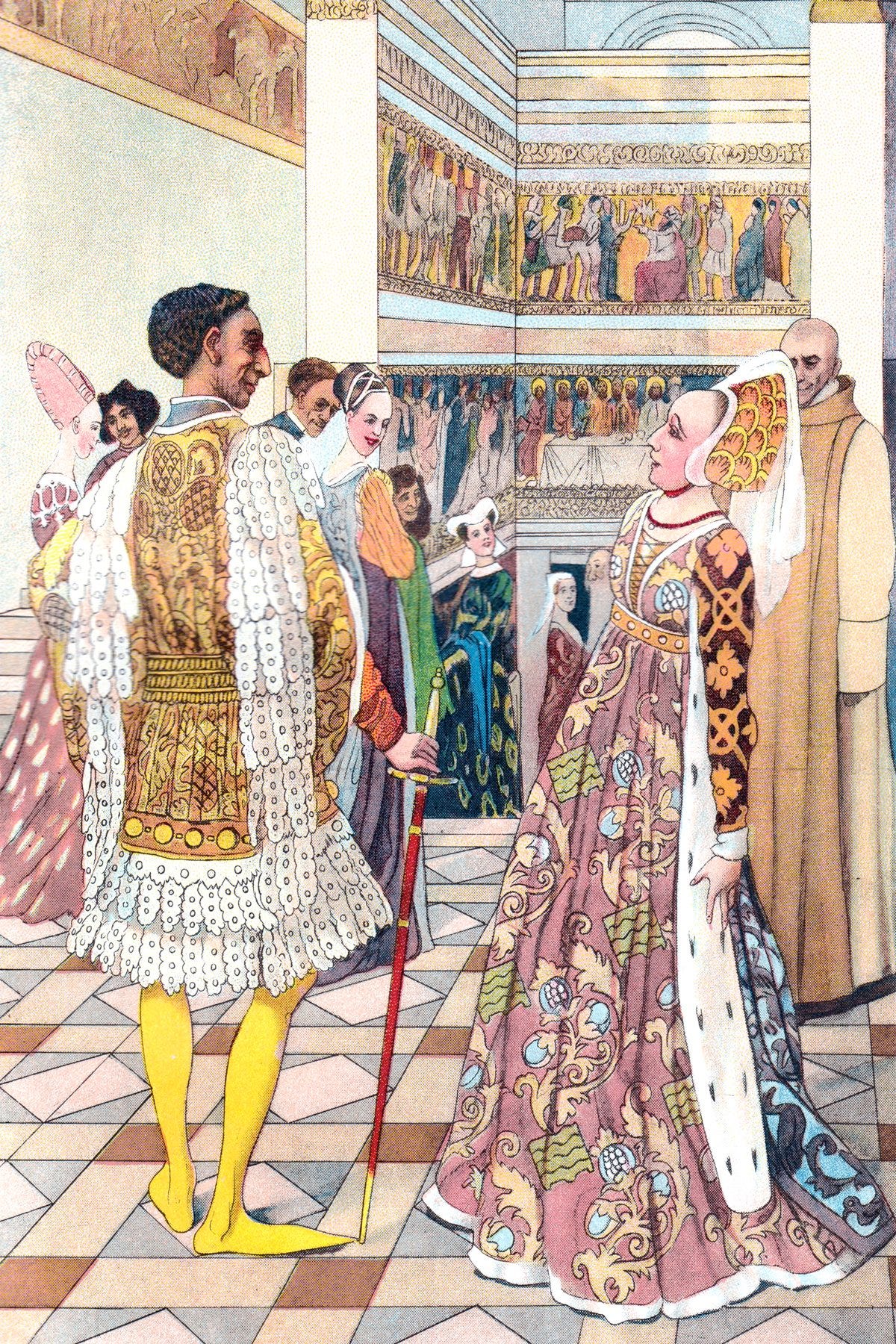
Long before a city is represented on a map, it exists as a web of circulating stories. News moves through streets as travelling tales long before plans do. It gathers beneath verandas, around market stalls, beside wells, beneath trees, inside majlis, on buses, at the caravanserai and outside school gates. Stories settle briefly in one place before continuing elsewhere, altered and exaggerated by every voice that carries them. Almost every tradition develops a set of verbal thresholds that signals to the listener that a story is no longer private.
Some of the recurring formulas across literature are:
“Have you heard…?”
“It is said…”
“Word has it…”
“It has reached me…”
“There is a report…”
“The talk is…”
“The common voice…”
“Rumour has it…”
“Everybody knows…”
“News came that…”
“The word went round…”
These phrases are fascinating because they are almost theatrical cues. The speaker is not simply conveying information; They are announcing that it is already in circulation. The story has entered the common realm.
What is more fascinating to me is that these stories are told, retold and carried from mouth to ear through places and spaces that play a crucial role in this theatre of travelling tales. We often think of cities as collections of buildings, roads and infrastructure. Yet perhaps cities are better understood as places through which stories move.
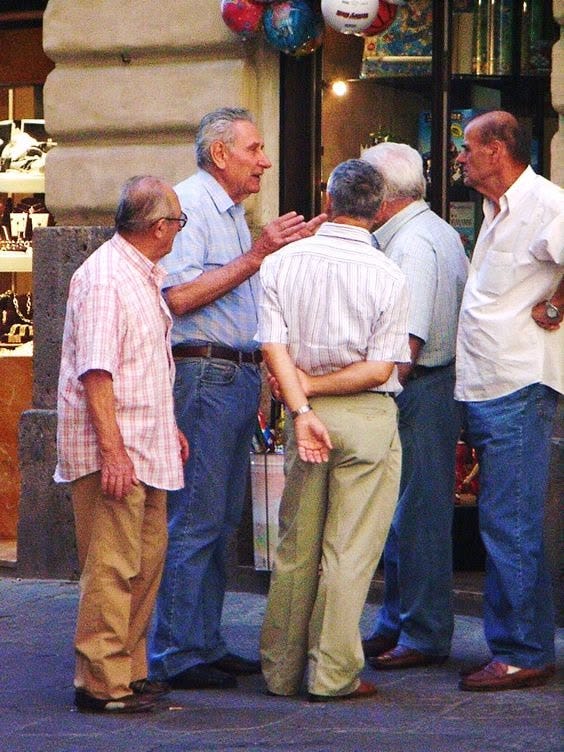
Architecture gives those stories somewhere to pause. Shakespeare, for instance, was obsessed with threshold spaces. Very rarely do important conversations happen in sealed private rooms. Instead, they happen in places where someone may be watching. The court is a hotbed of this kind of common talk. Think of Hamlet: Elsinore is almost an architectural machine for gossip. People are constantly behind tapestries, behind doors, in galleries, overlooking halls and standing in corridors. The architecture produces overhearing; nobody knows who is listening; rumour becomes architectural.
The garden plays a similar role in Much Ado About Nothing. In Othello, Venice itself matters enormously. Information travels through docks, streets and public squares. People constantly encounter one another. The Tabard Inn in Chaucer’s Canterbury Tales may be one of the greatest literary buildings ever invented. People from completely different social classes eat together, sleep together, drink together and tell stories. The inn is literally a story-generating machine. Without the inn, there are no Canterbury Tales. In The House of Fame, Chaucer invents an altogether imaginary building. Inside is an echo chamber where voices bounce everywhere, stories collide, truth mixes with lies and nobody controls anything.
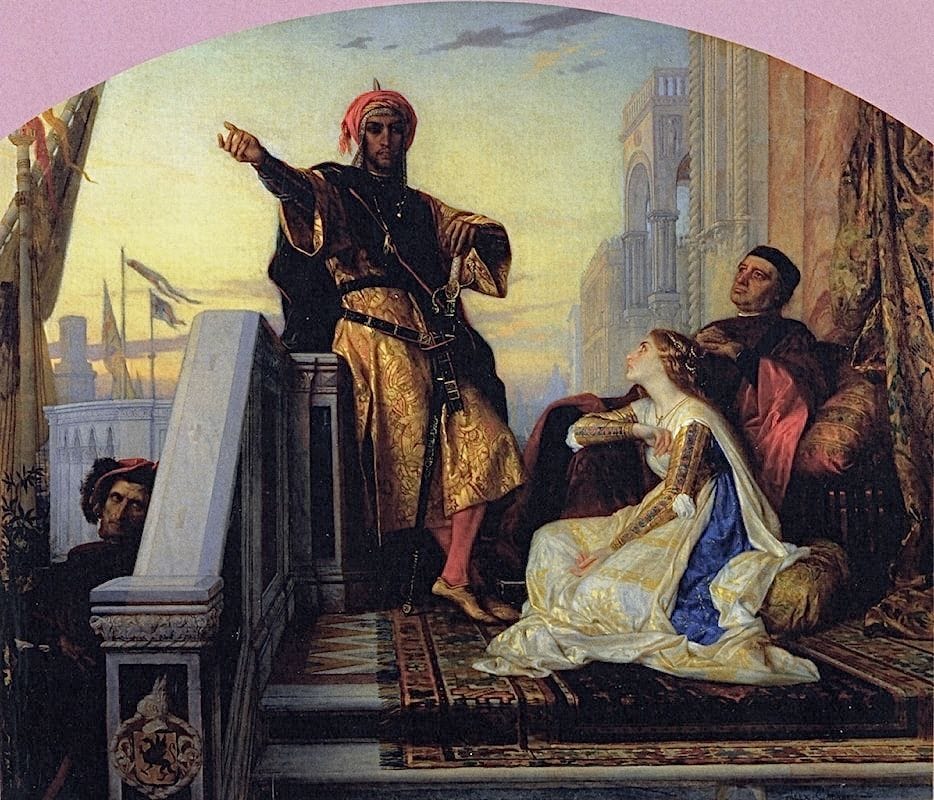
As architects, designers, artists and urbanists, we devote enormous energy to the orchestration of public spaces that will precipitously engender some kind of social theatre of engagement, friendship, animation, leisure and joy. We become fluent in the dimensions, materials and construction details of the perfect pavement, pedestrianised street, square and market. We fixate on urban design rules and dictums concerning double-loading pavements, pepper-potting uses and correct building heights. We hope that the correct arrangement of physical elements will generate that illusive vibrancy of social animation. Yet the things that ultimately give places meaning are often impossible to draw. They lie in lingering, watching, waiting, performing rituals, exercising rights and exchanging stories. None of these appears neatly on a construction drawing, yet every socially vivid city seems saturated with them. There is therefore a danger in attributing the success of a neighbourhood entirely to its architecture, as perhaps Jane Jacobs sometimes does. This neglects the sociological, psychological, cultural and economic phenomena that govern why its people behave as they do. Architecture can, however, make time and proximity available. It can offer shade, friction, enclosure, exposure, delay and the possibility of repeated encounters. It can create circumstances in which conversation is more likely to emerge.
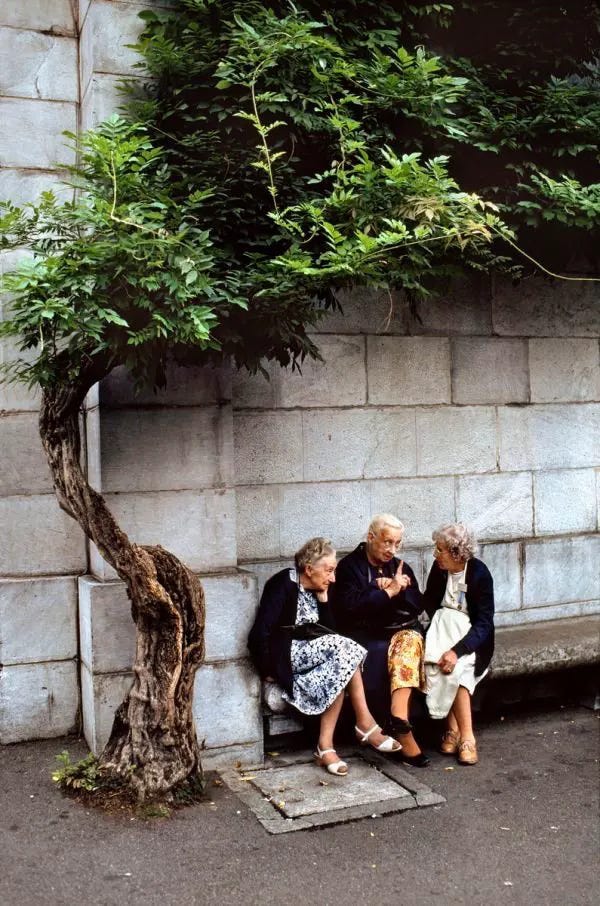
Living life in the public realm involves many considerations, contradictions, tensions, hostilities and uncertainties. This question becomes more pressing when so many traditional acts of social life can now take place within the home. We can work, shop, watch performances, exchange news and gossip through a screen. What, then, continues to draw people into public life, into the social worlds inhabited by the pilgrims of Chaucer, the citizens and courtiers of Shakespeare, or the merchants, travellers and storytellers of The Arabian Nights?
I suspect that we enter public life because we need stories. We need them to sustain us, bind us, give us identity and outlive us. Stories are not created in isolation; they are not insular. For stories to exist, we need society. We need people who are the voluntary or involuntary actors in the theatre of the story. We then need people to be the spectators, the audience who observe these narratives and then smuggle and release these stories into the various currents of society, to interpret and retell what they have seen. In short, we need gossip.
The word once meant something more intimate than idle chatter. It derives from the Old English godsibb, a person connected through kinship, sponsorship or trust. It described a relationship before it described a kind of speech. Only later did gossip acquire its modern association with scandal and triviality. This earlier meaning matters because gossip is never merely information. It is a relationship enacted through information. To tell someone a story is also to establish a bond: I trust you with this; I believe you will understand; you and I belong to the same field of knowledge.
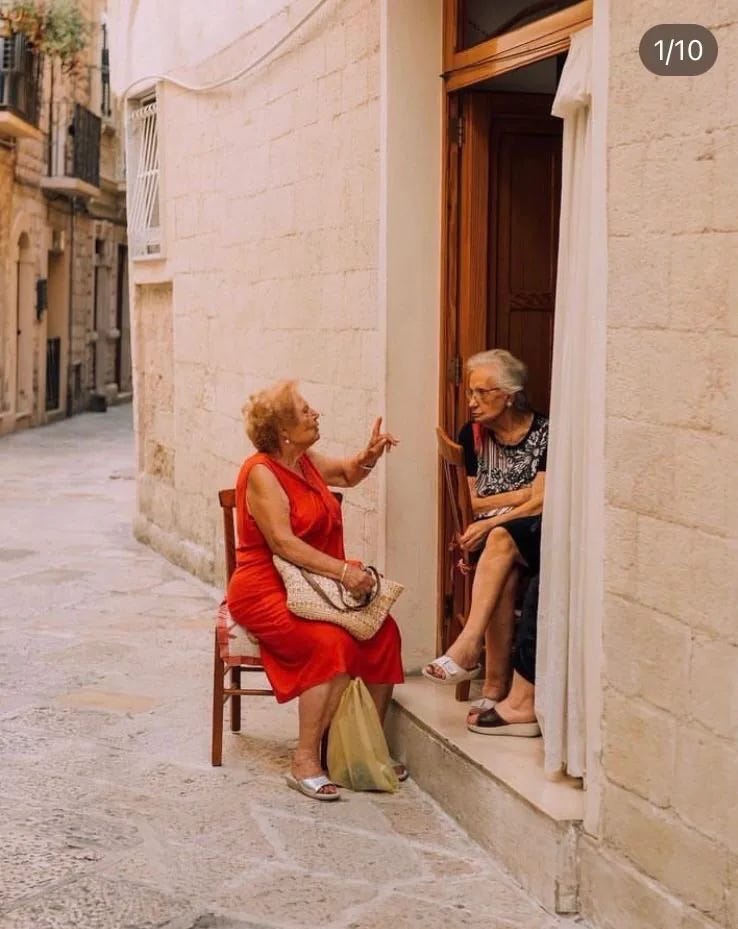
Every community develops stories that circulate continuously between people. Some are factual. Others are embellished. Some are certainly false and, at their worst, malicious. Yet their social importance often lies less in their accuracy than in their movement. Stories reveal who belongs, who is trusted, what is admired, what is feared and what remains unsaid. They create an invisible social geography layered over the physical city.
Cities possess many such parallel geographies.
One can navigate London through Tube lines, but also through recommendations passed between friends. Colombo exists not only through roads and neighbourhoods, but through family anecdotes, cricket victories, ghost stories and remembered monsoon floods. Dubai, despite its reputation for perpetual newness, is quietly accumulating its own circulating stories: a restaurant everyone suddenly knows about; a beach everyone claims to have discovered first; an elderly tailor who has repaired clothes for three generations. These places and stories rarely appear on official maps. Yet they become another form of urban infrastructure.
Richard Sennett has written about the city’s capacity to expose people to difference. Henri Lefebvre argued that urban space is continually produced through everyday life, rather than simply designed into existence. Reading these ideas together, one might ask whether common talk is one of the primary means by which cities are made.nNot conversation as formal debate or organised consultation, but conversation in its loosest forms: waiting, listening, watching, overhearing, remembering and retelling.
There is something deeply spatial about gossip. Stories rarely circulate while people are moving quickly and purposefully. They require delay. They require friction, shade and a bench.
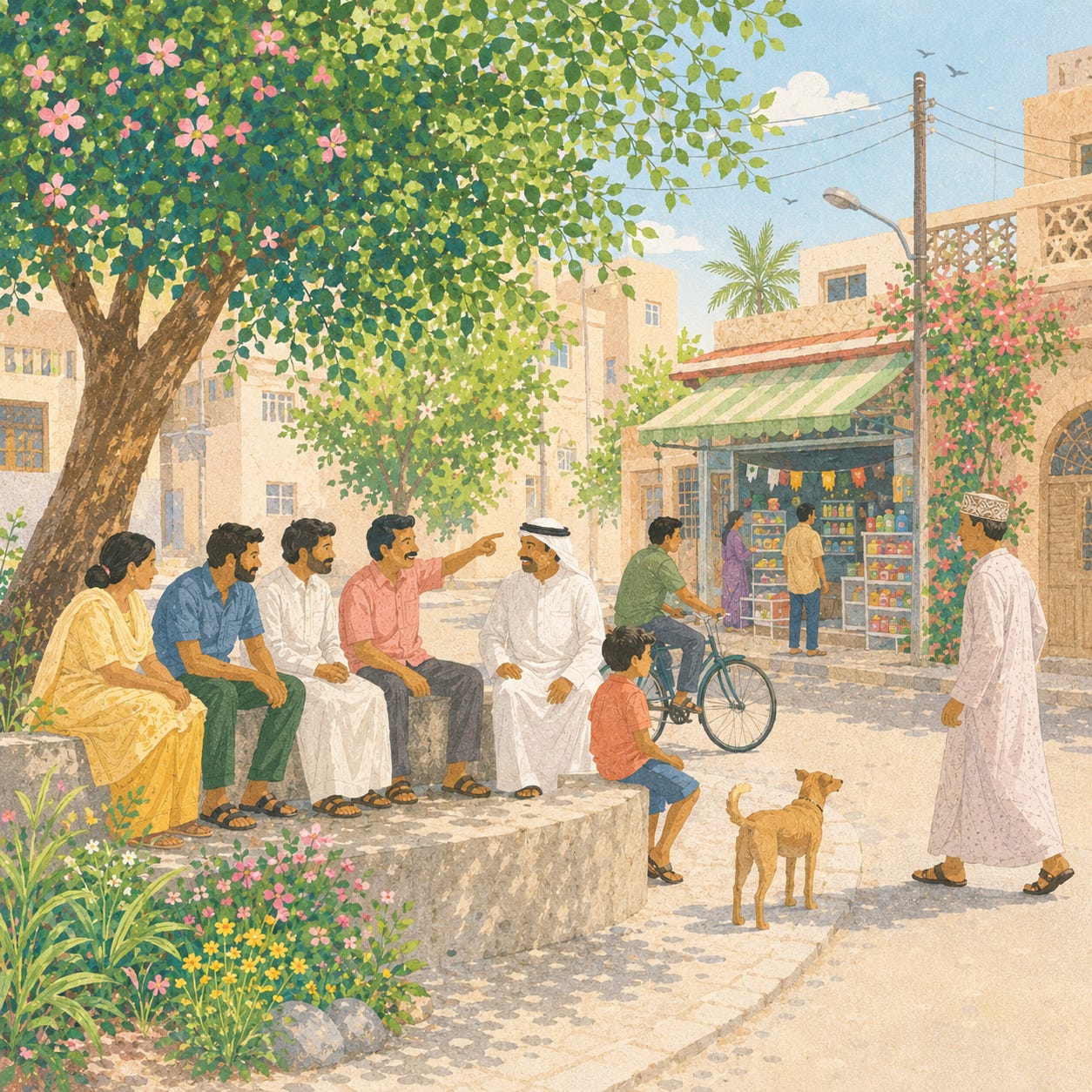
The low wall outside a corner shop, the edge of a planter, a tea stall, a shaded stair and the entrance to a school are all threshold spaces. They belong fully to neither arrival nor departure, neither privacy nor complete publicity. They are transitional, but they are also socially productive. People who might never invite one another into their homes may still exchange observations while waiting beneath a canopy.
Architecture matters, then, not because it determines conversation or even forces it, but because it lengthens the amount of time available for it to emerge.
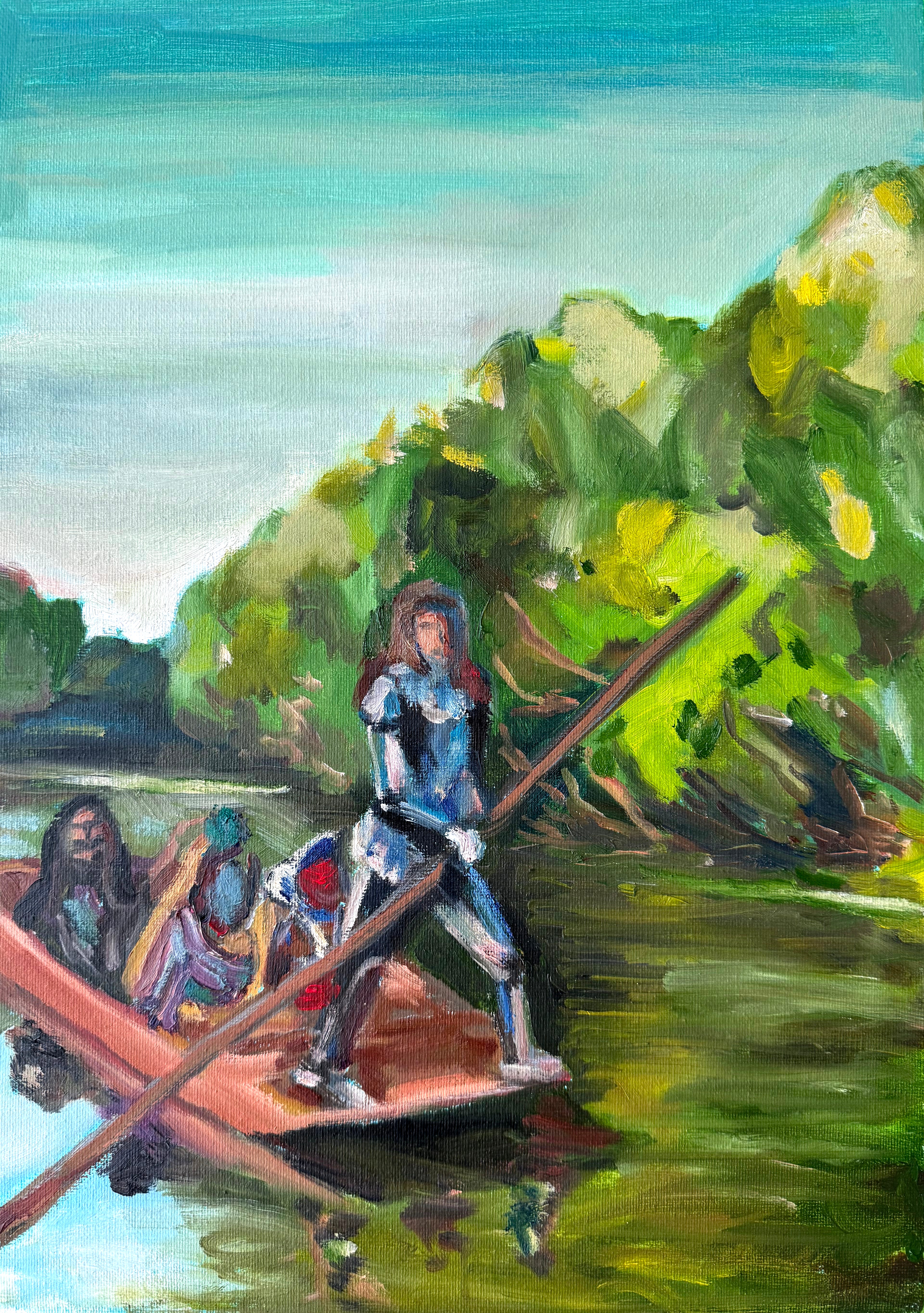
As an artist, I am interested in painting these encounters. I am interested in picturing unlikely groups of people gathered within shared spaces, and in asking what might pass between them. Imagine a medieval knight, an Emirati woman, a Greek god and a Kandyan dancer punting along a river. Are they performers? Are they part of the same play? Where are they going? What tales are they exchanging? What misunderstandings, rumours or fragments of inherited knowledge pass from one figure to another?
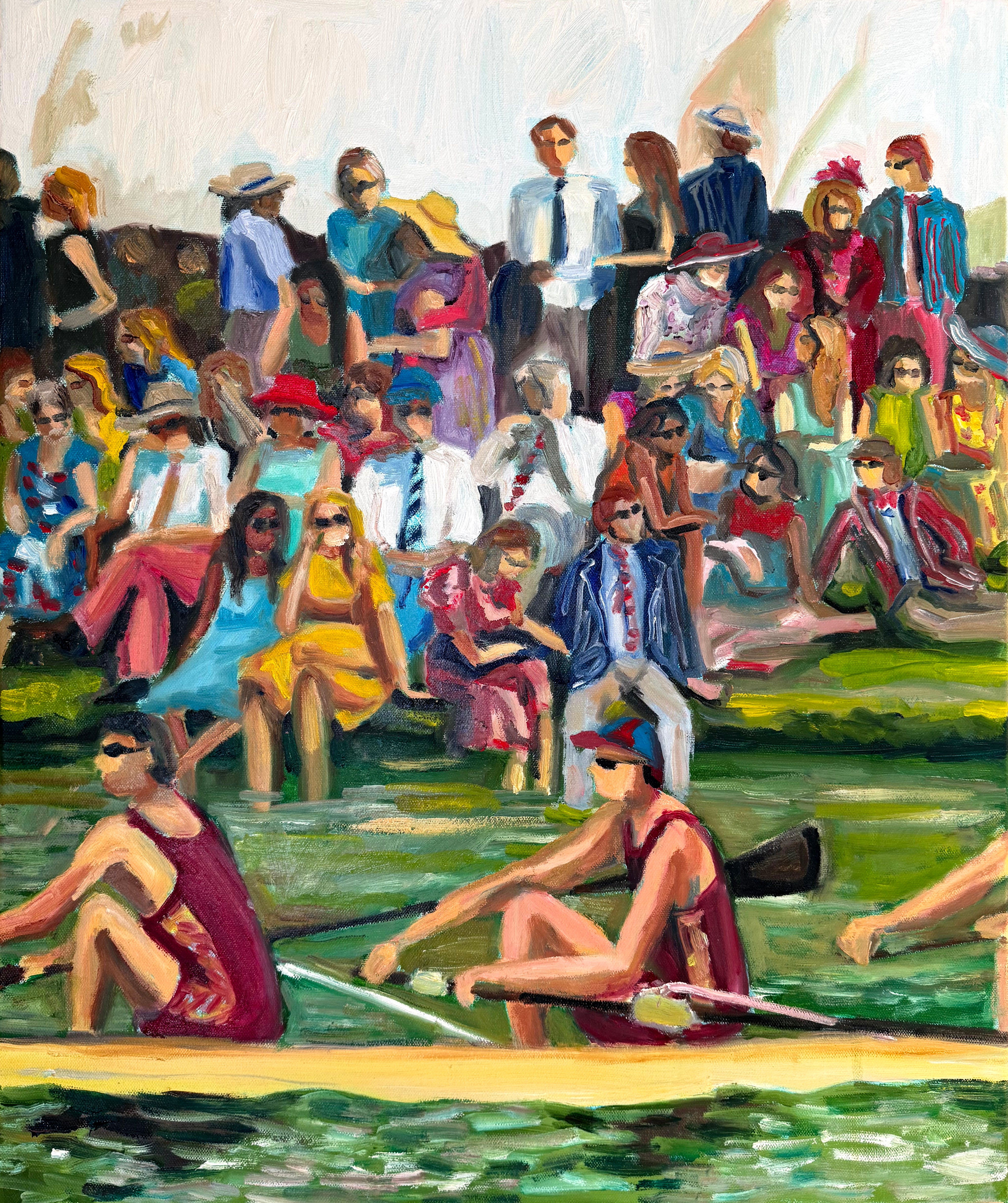
I am equally interested in the ordinary pageantry of sporting events, weddings and funerals, especially in the people who watch from the edges. What are they observing? Whom are they watching rather than what? To whom will they describe the scene afterwards? What will they omit, embellish or misunderstand? The observer interests me because observation is the first stage of circulation. The witnessed scene does not remain where it occurred. It leaves through the spectator.
By beginning with people and their practices, rather than with the ideal dimensions of public space, we might reverse the usual architectural question. Instead of asking how spatial design produces participation, we can ask what kinds of spatial conditions allow existing social impulses to become visible. The city may then be understood not simply as a composition of buildings, but as a theatre of travelling tales: a place where stories pause, gather witnesses, change hands and continue elsewhere.