

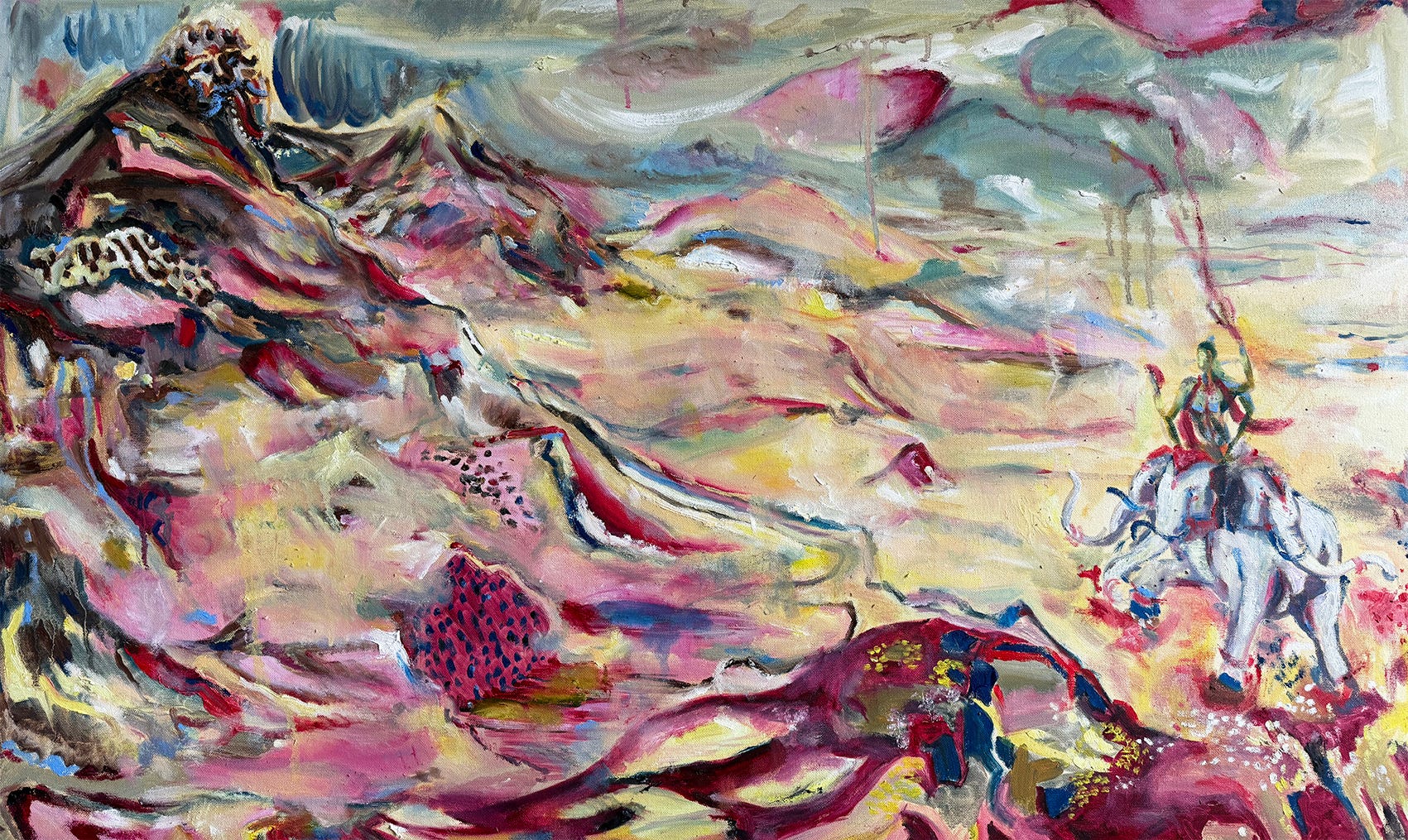
I write this not only as a reader of mythology, but as a fine artist engaged in the act of looking again.
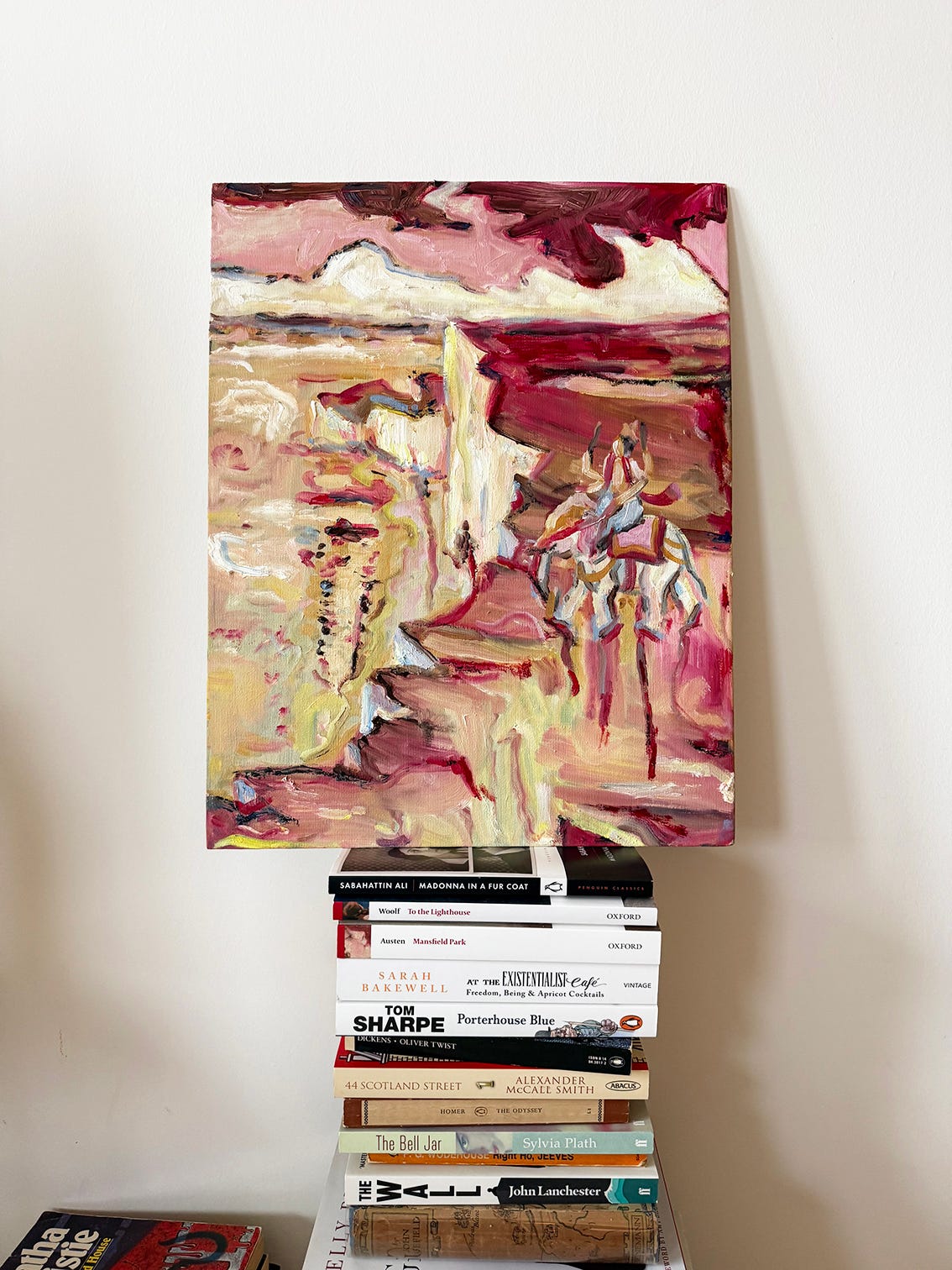
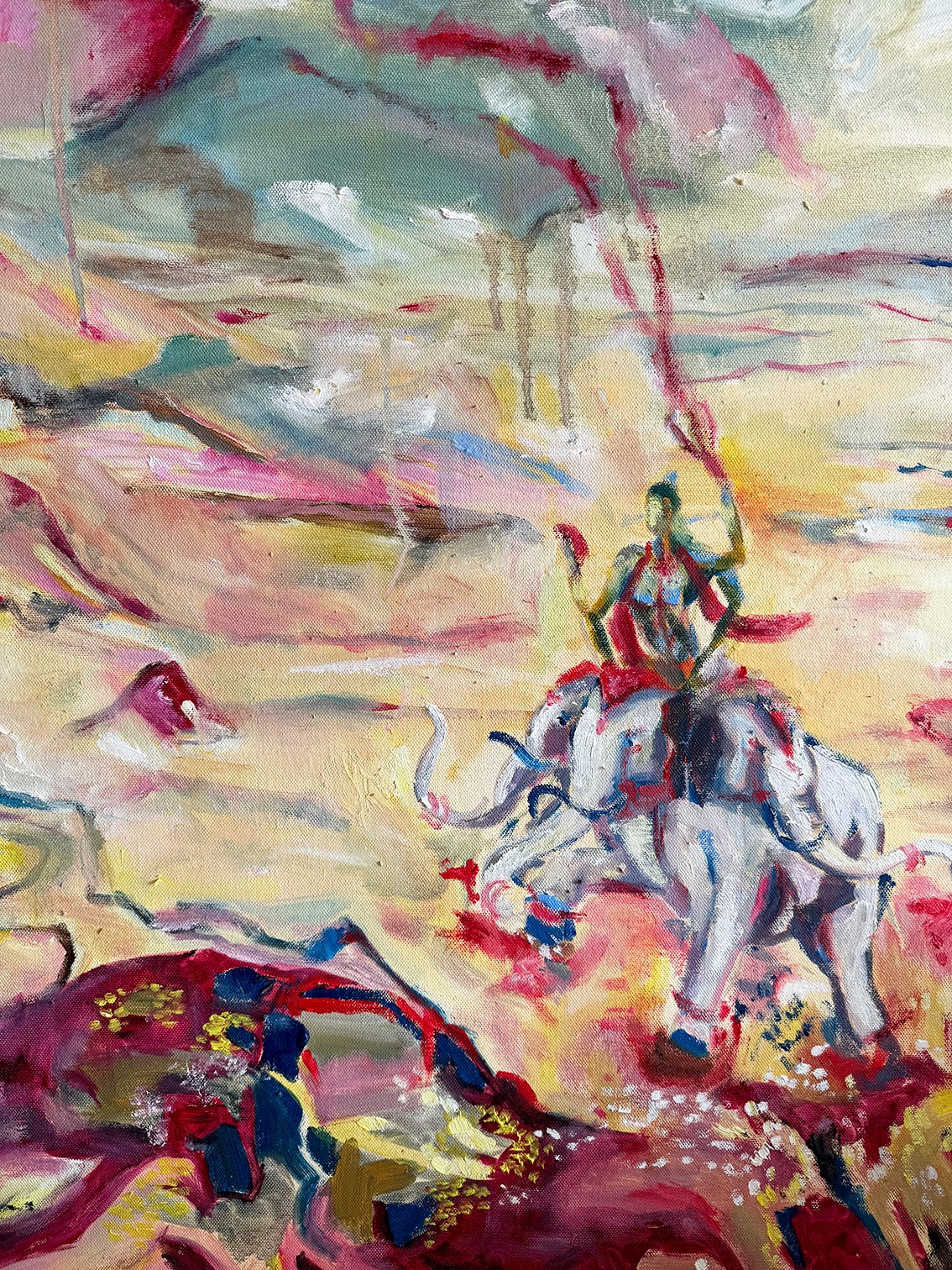
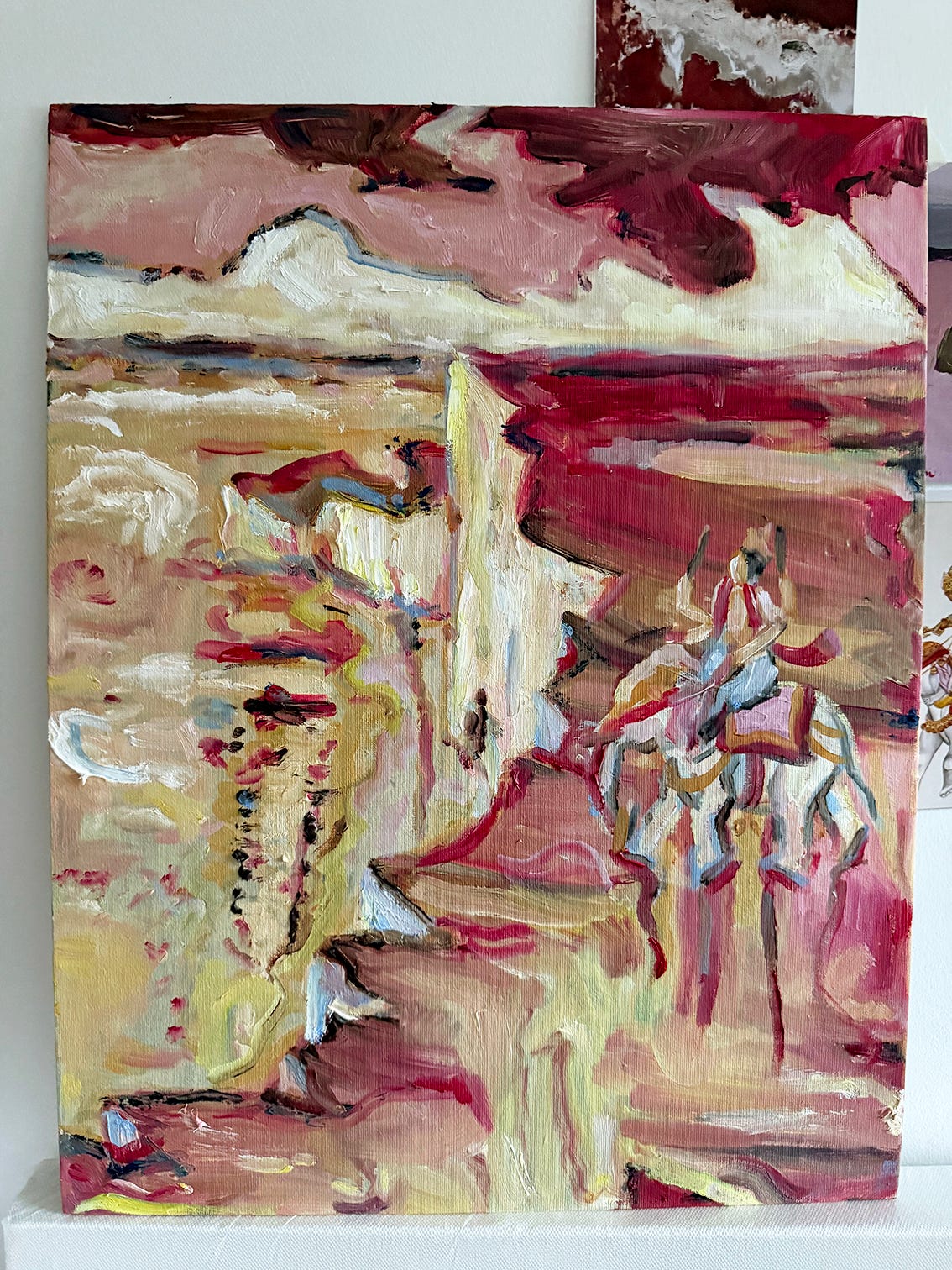
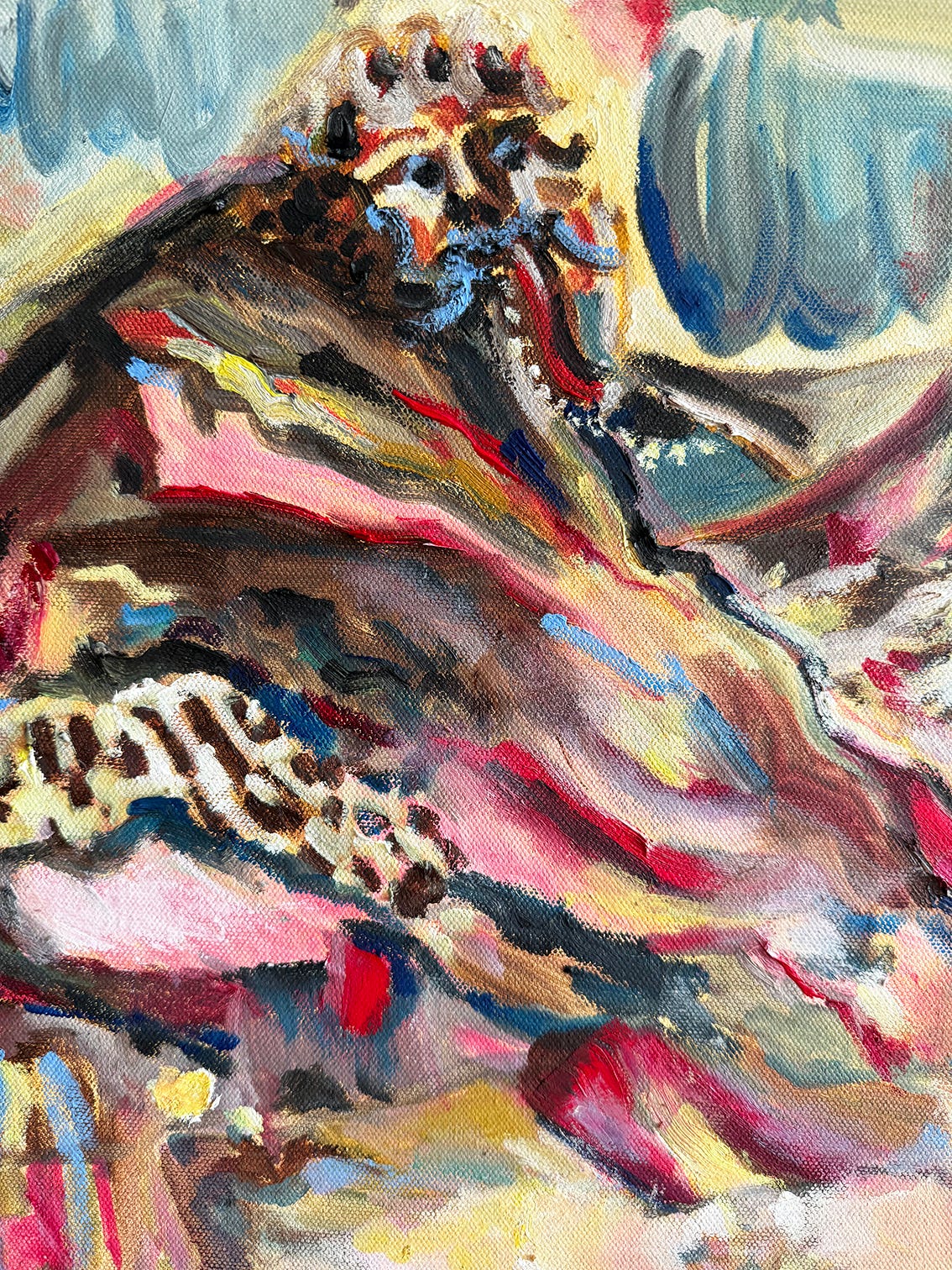
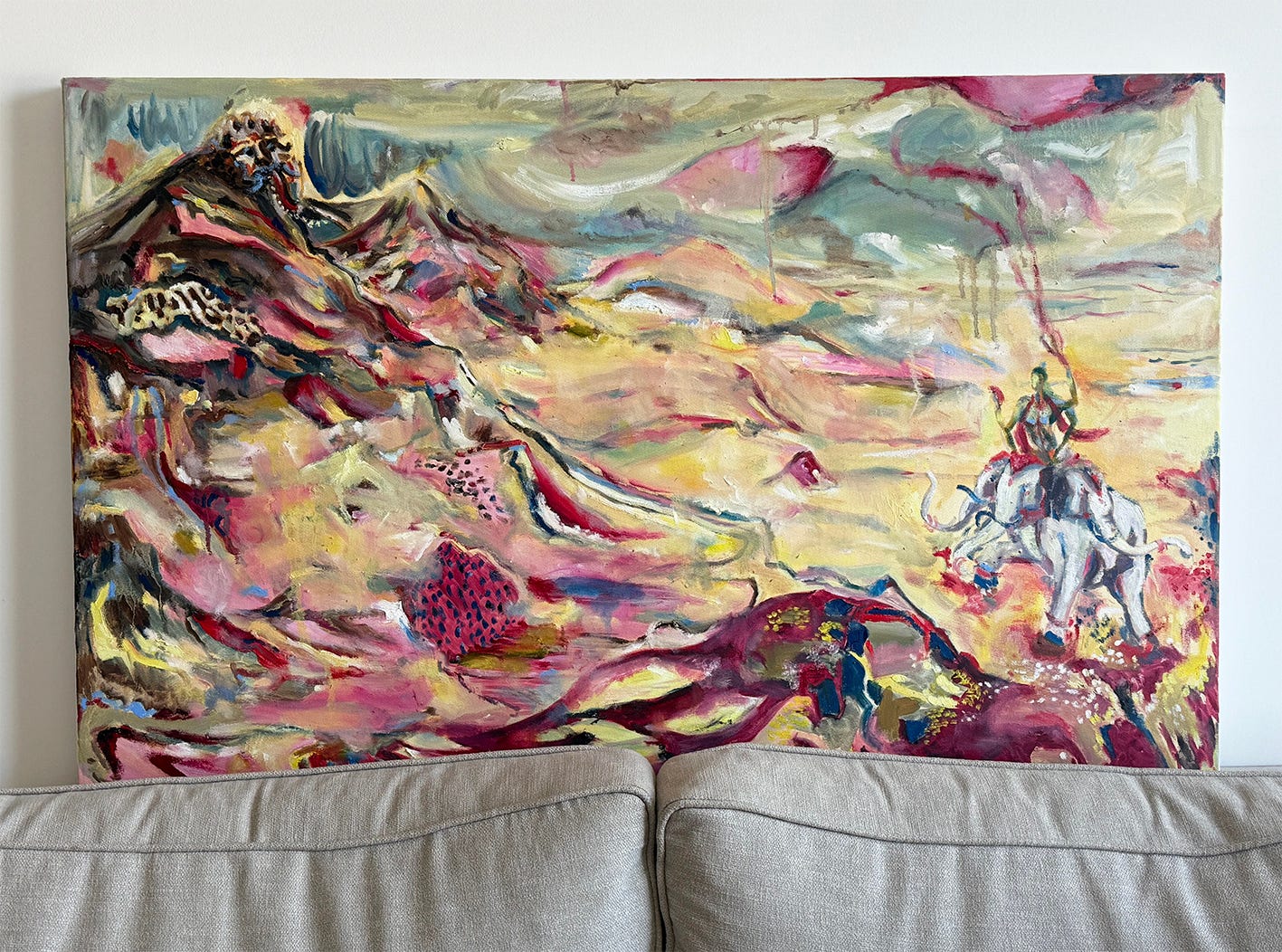
My current painting series is a meditation on South Asian mythology and cosmology, specifically, Hindu and Theravāda Buddhist traditions, and on what it means to inhabit them visually. These works are not illustrations of scripture, they are attempts to think through paint: to grapple with multiplicity, cyclical time, unstable divinity, and layered cosmology as living intellectual architectures. This essay emerges from that practice. It reflects on why that kind of looking feels necessary after centuries of Western aesthetic dominance and why it remains culturally charged.
When “mythology” is invoked, in the West at least, it usually signifies two inheritances: we mean the white marble torsos of Apollo and Venus; we mean Adam and Eve; we mean the Sistine Chapel ceiling and Pre-Raphaelite Madonnas; we mean the inheritance of Zeus and the Annunciation. Greco-Roman and Judeo-Christian narratives uniformly saturate European architecture, museums, civic buildings, and the canon of Western art. They shape the symbolic grammar through which beauty, morality, and transcendence are often imagined.
Because they are ubiquitous, they feel universal. But ubiquity is not universality. It is just dominance.
Saturation Is Not Neutrality
Greco-Roman and Judeo-Christian mythologies and narrative systems have endured not simply because they are compelling, but because of the political and cultural hegemony that carried them across continents through empire, missionary expansion, and colonial education. When these mythologies become the default visual language of “high culture,” something subtle happens: other cosmologies become ethnic, other stories become decorative, other gods become folklore. Instead of being read as philosophical frameworks, they are read as ancillary aesthetic motifs. In this way other cosmologies do not simply become peripheral, they become recoded as primitive, not because they are less sophisticated or less philosophically rigorous but because they are positioned as antecedent. What is positioned as “primitive” is thus and often simply what has been denied continuity within Western narratives of progress.
Greco-Roman antiquity was rediscovered and institutionalised during the European Renaissance. That revival folded neatly into colonial modernity. Because it was reactivated within modern Europe, it appeared continuous, progressive, and foundational to “modernity.” Meanwhile, other civilisations were framed as ancient but static, frozen in their classical past. Their classical periods are treated as sealed pasts, not as foundations of modernity. They become ancient in a way that suggests stasis.
This temporal hierarchy masquerades itself as aesthetic judgment. It is not accidental: it is the residue of empire.
As Edward Said argued in Orientalism, the West did not merely encounter the “Orient.” It produced it, aestheticised, categorised, and positioned it as timeless rather than intellectual and modern. Mythology became one of the primary sites of this flattening.
Mythology Is a Knowledge System
Yet South Asian mythologies whether drawn from the Tripitaka, Mahabharata, the Ramayana, Puranic literature, or regional folk cosmologies are not loose story-worlds. They are knowledge systems.
Traditions emerging from the Vedas, Upanishads, epic literature, Puranic cosmology, and the Pali Canon are layered intellectual structures developed over millennia. They contain philosophical debates on existential questions, theories of cyclical and recursive time, meditations on multiplicity, ethical frameworks, and political allegories. To engage them seriously is not to “diversify” aesthetics; it is to encounter different ontologies.
In many South Asian cosmologies, divinity is plural and fluid. Gods manifest, dissolve, merge, and reappear. Time unfolds cyclically rather than moving toward singular redemption. The cosmos expands and contracts across vast durations. Reality is rhythmic, recursive, and interdependent. These assumptions destabilise Western theological inheritances of singular creation, linear fall, and final salvation. To work within such cosmologies as an artist is not to borrow iconography. It is to enter different metaphysical premises. That is a radical act.
Cosmology With Textual Depth
What is often labelled “Hindu myth” is not a singular body of tales but a vast textual tradition. The early Vedic hymns contain striking cosmological speculation, including reflections that question whether even the gods know how the universe began. The Upanishads articulate sophisticated metaphysics of self, consciousness, and ultimate reality refined through centuries of commentary. The Mahābhārata and Rāmāyaṇa are not merely narratives but encyclopaedic works of ethics, theology, and statecraft. The Purāṇas elaborate intricate cosmographies: cyclical universes measured in kalpas and yugas, layered realms of existence, genealogies of gods and sages.
If “myth” implies informal inheritance, the Theravāda Buddhist tradition complicates the term further.
The teachings of the Buddha were preserved orally and later compiled into the Pali Canon (Tipiṭaka), divided into three structured collections: the Vinaya (monastic discipline), the Sutta (discourses), and the Abhidhamma (systematic philosophical analysis). The Abhidhamma, in particular, is rigorous phenomenology, a granular mapping of mental states, causation, and perception. It reads less like folklore and more like psychology or metaphysics. The canon was memorised, recited in councils, stabilised through commentary, and transmitted across Sri Lanka and Southeast Asia for over two millennia. Few traditions anywhere possess such institutional continuity.
By contrast, what we call “Greek myth” survives primarily through poetic works and later philosophical reinterpretation and Roman adaptation. They are foundational texts, but they are not preserved within a single continuous ecclesiastical canon in the way the Pali tradition is.
The difference, again, is not sophistication. It is how modern Europe chose to classify its inheritances.
One became “classics.”
The other became “myth.”
Postcolonial Practice as Re-reading
South Asian traditions are not undocumented folklore. They are among the most textually sustained bodies of literature in human history. What differs is the narrative Western modernity constructed about which records counted as philosophy and which were relegated to mythology.
To read beyond Greco-Roman and Judeo-Christian frameworks is not an act of rejection. It is an act of rebalancing.
Postcolonial practice is often imagined as critique, and it is. But it is also restoration. It asks whose cosmologies were dismissed as superstition, whose gods were translated into ornament, whose epics were reduced to legend. It refuses the hierarchy that separates “religion” from “myth,” “theology” from “folklore,” along colonial lines.
Engaging South Asian cosmologies on their own philosophical terms restores intellectual weight to traditions long aestheticised but insufficiently taken seriously in Western institutions.
This matters because mythologies shape imagination. They encode models of power, gender, temporality, ecology, and divine presence. If Western modernity has been shaped by certain mythic inheritances, then engaging other cosmologies expands not only our understanding of the past but our conception of the possible.
Plural Mythologies, Plural Futures
Plural mythologies allow plural futures.
This is not about replacing one canon with another. It is about dissolving the idea of a single centre.
My painting practice attempts to sit within that dissolution. The canvases are experiments in holding layered cosmologies within contemporary visual language. They do not resolve the tensions described here; they inhabit them.
I invite you to encounter the work not as illustration, but as argument in another form, an inquiry conducted through colour, composition, and spatial logic rather than footnotes.
Because myth is not only something we inherit, it is something we continually remake.
Great read!